Last reviewed
A note about the guide
A small guide.
A city full of good places.
Field Guide HFX is a pocket guide to eating and drinking in Halifax and Dartmouth, arranged the way people use the city: one neighbourhood at a time.
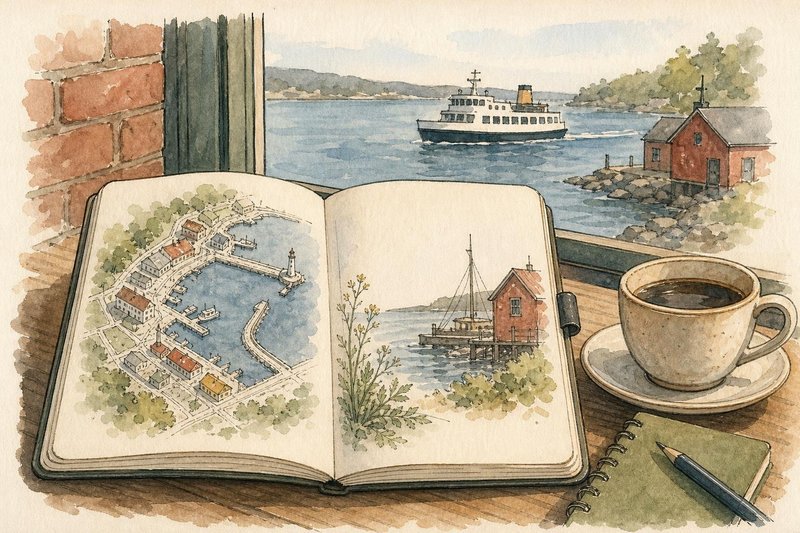
Inside the guide
Seven neighbourhoods.
Five city-wide chapters.
Pick a neighbourhood, then follow your appetite. Each neighbourhood chapter brings together places to eat, coffee for the morning and drinks for later. Brunch, coffee, breweries, the donair and seafood each have a chapter of their own that crosses the whole city.
The opening map is drawn from OpenStreetMap data, showing the peninsula, the harbour and the areas each chapter covers.
The editorial approach
How places are chosen.
A reason to go
A kitchen with a clear point of view, a bar people return to, a café worth the walk. Each place is listed for what it does well, and the description says what that is in a sentence or two, so a reader can tell quickly whether it suits the evening they have in mind.
Old favourites, new rooms
Long-running neighbourhood places sit alongside newer ones. Being new is not the reason a place earns a spot, and neither is being old: a tea room that has served the same breakfast for decades and a taproom that opened last year are judged the same way.
Independent listings
Listings are not paid for, and the guide carries no advertising. No place is told in advance that it will appear, and none can pay to move up a list or to be left off one.
Claims that can be checked
When a page says a place won a reader poll, it names the poll and the year. Words such as oldest, first and best are used only when there is a record behind them, and a disputed story is told as a disputed story.
Reading a chapter
How the chapters are put together.
Each neighbourhood chapter follows the same order: restaurants first, then coffee, then bars, followed by a short background section, a few field notes with a map and a set of common questions. The city-wide chapters follow a single subject instead of a street, so the coffee, brewery, donair and seafood chapters group places by area and point back to the neighbourhoods for everything else nearby.
Every entry gives the name, the kind of place and the address. Where a street number is known it is included, and on the neighbourhood pages the address opens a small map of the street. Prices, opening hours and menus are left out on purpose, because they change too often to be kept accurate.
Halifax and Dartmouth have been one municipality since 1996, and the guide treats them as one city divided by a harbour. The Alderney ferry runs often enough to be part of an ordinary evening, so several chapters cross the water.
Reader polls appear where they help. The most often cited is the annual Best of Halifax poll run by The Coast, the city’s alternative weekly, and the guide gives the category and the year whenever it mentions a result.
Before a chapter is reviewed, every entry is checked against the place’s own listing and recent local coverage. A place that has closed or moved is removed or corrected, and a place that has changed its kitchen is described again rather than left with an old description.
There are no star ratings and no numbered rankings within a chapter. The order of a list follows the street or the kind of place, not a score, because the best choice depends on the evening, the company and the weather.
The maps throughout the guide are drawn from OpenStreetMap data and show streets, parks and the shoreline rather than individual buildings. The coloured shapes mark the area each chapter covers, not an official boundary.
A living city
Keeping it current.
Restaurants open, move and close. The chapters are reviewed regularly, and entries are updated or removed when a place changes. The date of the latest review is shown at the top of every chapter.
Open the guide